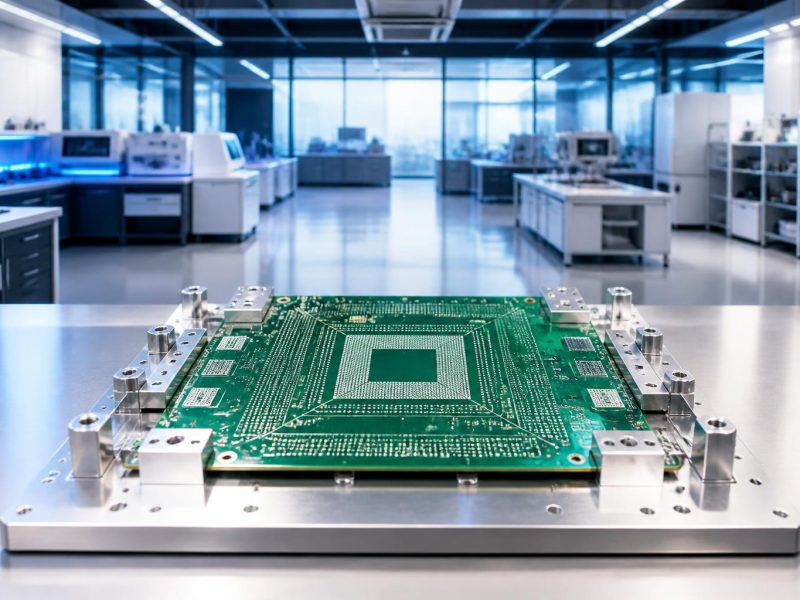
From Microchips to Meaningful Change: Navigating Modern Technology and Innovation
Exploring how technology shapes today’s world, this article dives into innovation, digital tools, and evolving tech trends with practical insights.

Foundations and Frontiers
Technology today acts as a backbone for countless disciplines, yet its real power lies in transforming how we solve problems. From semiconductor design to cloud-native architectures, the landscape rewards those who blend theory with practical application. By embracing cross-disciplinary thinking, teams can convert abstract concepts into tangible products that meet real customer needs. In this environment, continuous learning becomes a strategic asset, not a casual hobby. For a deeper look, see AI video editor.
In practice, organizations cultivate cultures where experimentation thrives alongside disciplined execution. Innovation flourishes when teams pair rigorous validation with iterative prototyping, allowing ideas to mature in response to feedback. Digital tools enable faster cycles, while governance structures preserve quality and security. The result is a resilient ecosystem where technology and people co-evolve toward common outcomes.
Accelerating with Digital Tools
Modern workflows hinge on a suite of digital tools designed to streamline collaboration, data analysis, and delivery. When teams adopt integrated platforms, information flows more freely, enabling faster decision-making and fewer silos. The most successful implementations blend automation with human judgment, ensuring processes remain adaptable as requirements shift. In this environment, technology becomes a multiplier rather than a constraint.
Tooling choices must align with strategic priorities, balancing speed, accuracy, and cost. Metrics-driven approaches reveal which workflows yield the highest impact and where optimization is warranted. Practitioners increasingly rely on scalable infrastructure, robust monitoring, and accessible dashboards to keep teams aligned across geographies and time zones.
Emerging Practices
- Automation for repetitive tasks reduces cognitive load and frees up brainpower for creative work.
- Observability practices empower teams to diagnose issues quickly and prevent escalation.
- Collaborative platforms break down barriers between departments, accelerating alignment.
AI and the Shape of Innovation
Artificial intelligence continues to redefine how products are built and experiences are crafted. The most impactful use cases blend data, domain expertise, and scalable models to deliver personalized solutions at enterprise speed. Ethical guardrails and transparent methodologies ensure AI augmentation remains trustworthy and aligned with business goals. As models mature, organizations transition from experimentation to sustained, repeatable value creation.
For teams entering this space, practical steps include curating high-quality data, validating models in real-world contexts, and designing interfaces that demystify automation for end users. Real-world deployments reveal not just performance metrics but also how AI changes workflows, customer interactions, and internal collaboration. The technology shifts become strategic advantages when adopted thoughtfully and with clear governance.
Adapting to Tech Trends
Tech trends influence every sector, guiding investment, hiring, and product roadmaps. Sectors like healthcare, finance, and energy increasingly rely on edge computing, privacy-preserving analytics, and resilient architectures to meet regulatory and performance demands. Leaders who translate trend insights into concrete pilots avoid chasing fads and instead build repeatable paths to value. This disciplined approach sustains momentum across cycles of disruption.
Organizations that monitor trend signals—customer behavior shifts, regulatory changes, and interoperability standards—are better prepared for uncertainty. Cross-functional teams synthesize insights from market intelligence, user research, and technical feasibility studies to decide which bets to place. The outcome is a portfolio of initiatives that balance experimentation with scale-ready production lines.
Security and Compliance in a Digital World
As digital tools proliferate, security and compliance rise from afterthoughts to core design principles. Proactive risk management begins with threat modeling, secure coding practices, and continuous testing that mirrors real-world attack vectors. By integrating security into the development lifecycle, teams shorten remediation cycles and protect customer trust. A mature program treats compliance as a competitive differentiator rather than a checkbox.
Effective governance requires clear ownership, transparent reporting, and incident-readiness exercises that involve diverse roles. Organizations align policies with evolving regulations while maintaining agility through automation and standardized controls. The result is a resilient technology stack that can adapt to new risks without sacrificing speed or user experience.
Building People-Centric Technology Teams
Technology progress depends on people as much as on machines. Successful teams recruit for curiosity, collaboration, and a growth mindset, then provide ongoing opportunities to upskill with hands-on practice. Mentorship programs, pair programming, and internal tech talks cultivate an environment where knowledge spreads organically. When engineers feel empowered, they contribute more meaningfully to product outcomes and organizational learning.
Leaders also invest in inclusive cultures that value diverse perspectives, recognizing that innovation often emerges from unexpected combinations of backgrounds. Clear career ladders, transparent feedback loops, and measurable development plans help retain top talent and sustain momentum. In such settings, technology becomes a shared mission rather than a solitary pursuit.
Shaping the Next Wave of Digital Products
The next wave of digital products will blend immersive experiences, intelligent automation, and sustainable design. Companies that prioritize user-centric research, rapid prototyping, and scalable architectures can reduce time-to-market while maintaining quality. By focusing on outcomes over features, teams deliver products that truly resonate with customers and adapt to changing contexts over time. Innovation becomes an ongoing dialogue between users and developers.
To translate vision into market impact, firms embrace modular architectures, open ecosystems, and continuous experimentation. This approach supports faster iteration cycles, easier integration with external partners, and a clearer path to monetization. With disciplined execution, technology-driven ventures can weather volatility and emerge with durable competitive advantages.
Note: This article integrates real-world insights about technology, innovation, digital tools, and tech trends to provide tangible guidance for practitioners seeking to craft durable value in fast-moving markets. For practical AI tooling, consider exploring tools like an AI video editor to accelerate creative workflows without compromising quality.